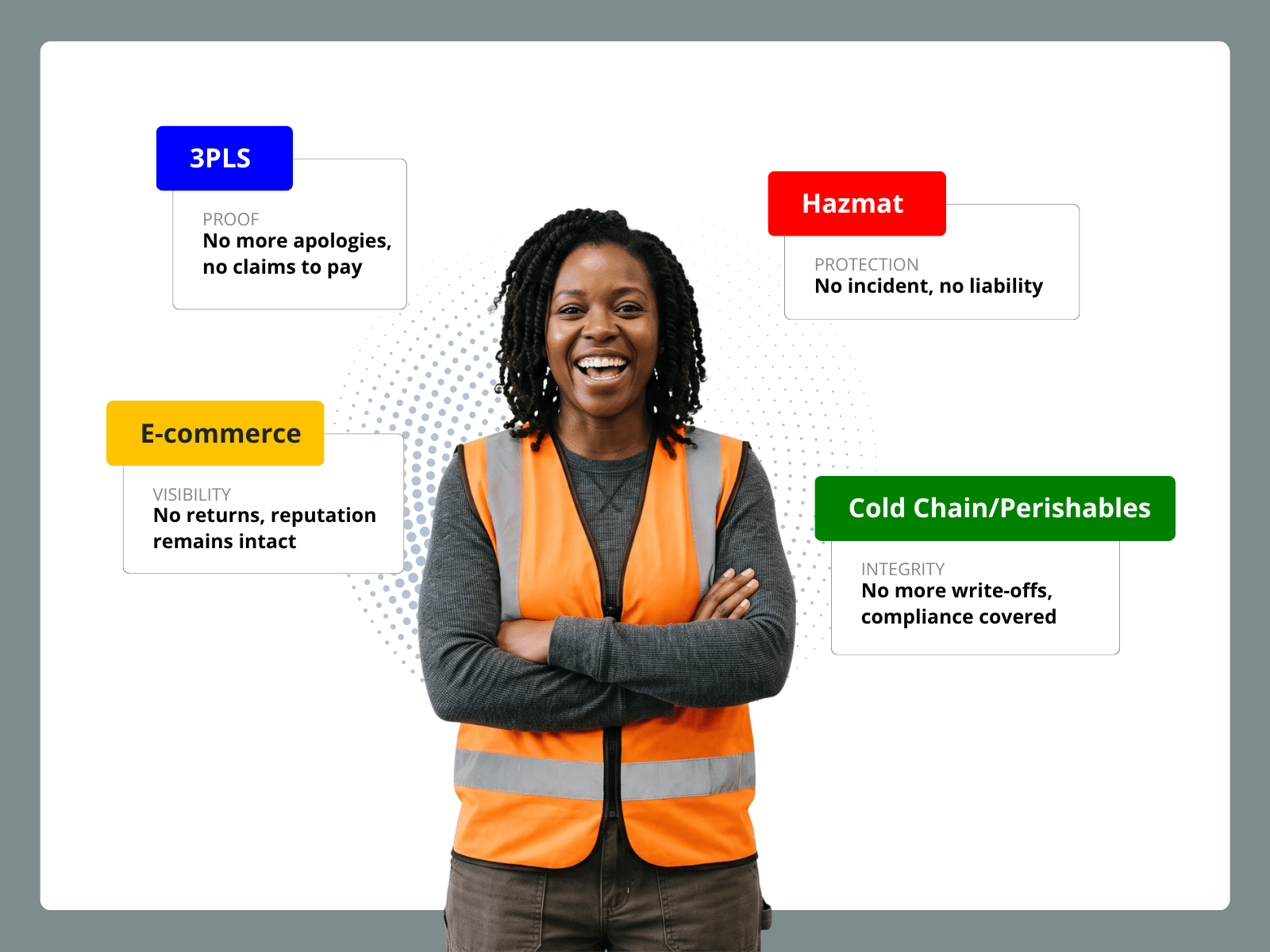
→ IT DOESN'T REALLY MATTER WHAT'S ON THE PALLET
The "prove it" problem doesn't really care what industry you're in.
Unverified loads cost shippers money, expose partners to risk, and leave OEMs with untapped opportunity. The industry changes. The problem doesn't.
→ THE PROOF PROBLEM
WHO WE SERVE
Every facility that ships pallets has the same blind spot — an unverified load leaving the dock without proof of its condition. What changes is what's at stake when it goes wrong.
Third-Party Logistics Providers (3PL)
When your client's freight arrives damaged, the first question isn't what happened in transit — it's what your dock did. Without a verified record at the wrap point, that's a question you can't answer confidently. Damage chargebacks, disputed claims, and manual documentation are eating into margins that were already thin. PalletVision gives you a defensible record for every load that leaves your facility — automatically, without adding a step to the process.
E-Commerce Fulfillment
Mixed SKUs, high velocity, and a return rate that compounds every mistake. When a load arrives damaged, it's not just the product value — it's reverse logistics, re-pick, re-pack, re-ship, and a customer who may not come back. Load health scoring gives you visibility into which loads are at risk before they ship. That's a capability your wrapper alone can never provide.
Perishables & Cold Chain
You can prove you kept it cold. Can you prove you kept it intact? Temperature monitoring covers one half of the cold chain story — load integrity at the wrap point covers the other. A compromised perishable load isn't a damaged shipment. It's a total write-off. And under FDA FSMA and USDA requirements, the documentation gap at the wrap point isn't just an operational problem. It's a liability.
Hazmat & Dangerous Goods
A pallet of industrial chemicals that shifts in transit isn't a damaged shipment — it's a hazmat incident. Highway closures. Environmental remediation. Criminal liability. The shipper of record bears responsibility from the moment it leaves the dock. If you cannot prove the load was properly secured and documented at origin, you bear responsibility for everything that happens downstream. An immutable digital signature at the wrap point isn't a nice-to-have. It's a legal shield.
Freight Brokers
ou don't own the dock. But you own the relationship when something goes wrong. Every damage dispute between a shipper and carrier lands in your lap — draining resources, eroding margins, and putting relationships at risk on both sides. PalletVision gives your shippers verifiable proof of condition at the wrap point, resolving disputes in minutes instead of months. Brokers who can guarantee their shippers send out documented loads become preferred partners for top-tier carriers.
%20(1).png?width=655&height=450&name=655x455%20web%20images%20(3)%20(1).png)
→ WHAT EVERY INDUSTRY HAS IN COMMON
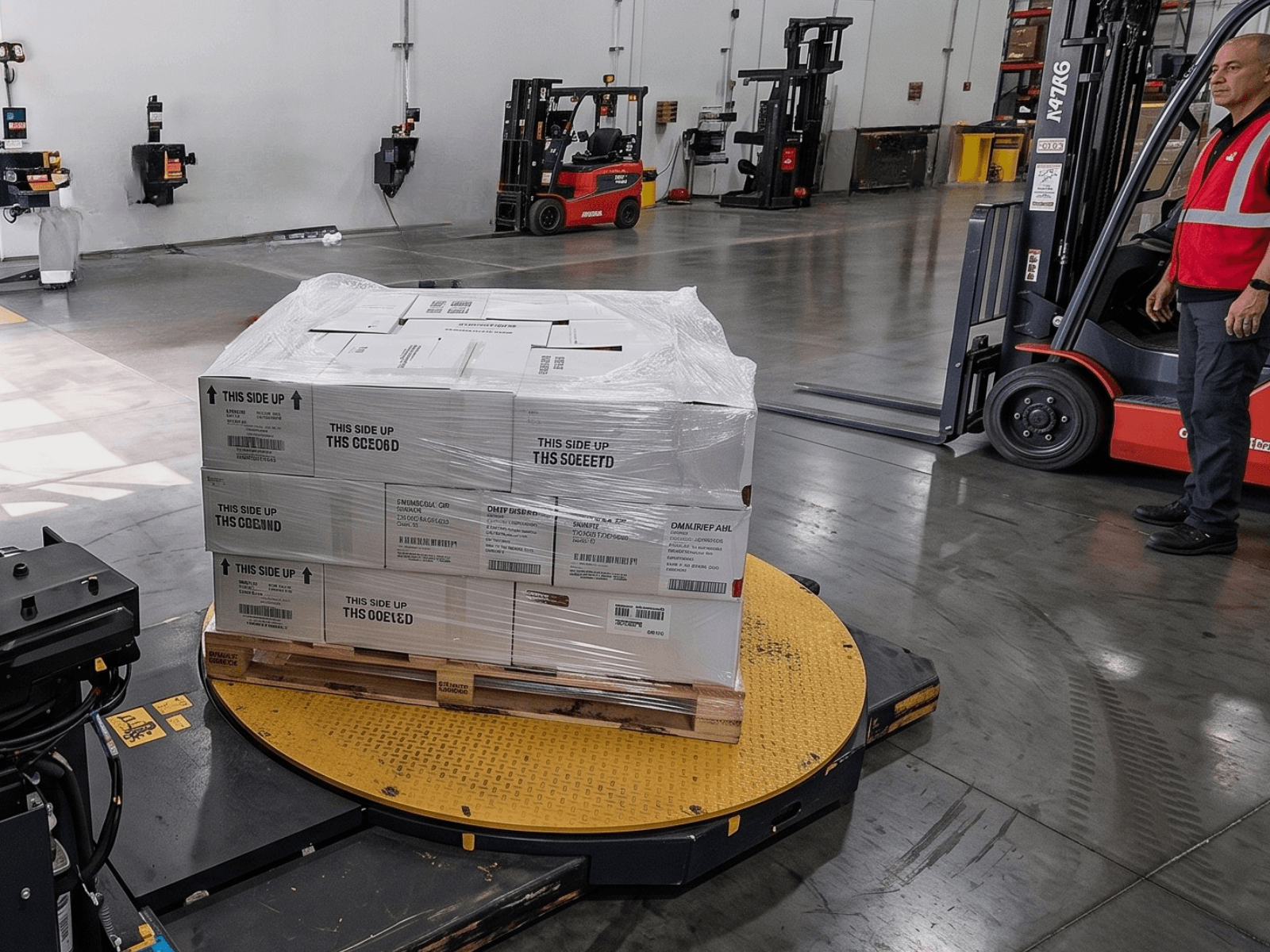
The wrapper is the last thing that happens before a load enters the supply chain. It's also the least verified moment in the entire process.
Regardless of what's on the pallet — frozen food, industrial chemicals, electronics, consumer goods — the problem is the same. A load leaves without verified proof of its condition. And when something goes wrong downstream, there's nothing to show for it.